What is LPG? A Practical Guide for Rwandan Homes and Businesses Ready to Move On From Charcoal
If you've spent any time in a Rwandan kitchen — whether it's a family home in Nyamirambo, a roadside brochette stand in Musanze, or a busy restaurant in Kigali — you already know the routine. Charcoal arrives in a heavy sack. Someone breaks it up. The imbabura (charcoal stove) gets lit, blown on, fanned, and after twenty or thirty minutes of smoke and patience, you can finally start cooking.
It works. It has worked for generations. But it's also expensive, slow, dirty, and increasingly hard to justify — for your wallet, your lungs, and your time.
LPG changes all of that. In this guide, we'll walk through exactly what LPG is, how it works, why it has quietly become the smarter choice for thousands of Rwandan households and businesses, and how you can switch — easily — through Tekeraheza.com, Rwanda's growing marketplace for LPG cylinders, refills, and accessories, with dealers in every region of the country.
What Does LPG Actually Mean?
LPG stands for Liquefied Petroleum Gas. It's a clean-burning fuel made primarily from two gases: propane and butane. These gases are by-products of natural gas processing and crude oil refining, and they share a very useful property — when you put them under modest pressure, they turn from a gas into a liquid.
That's the magic. As a liquid, LPG takes up about 250 times less space than it does as a gas. That's why a relatively small steel cylinder can store enough fuel to cook for weeks. Open the valve, and the liquid quickly turns back into gas, ready to burn cleanly on your cooker.
In Rwanda, the LPG you'll find in cylinders is typically a propane-butane blend optimised for the climate — it lights easily, burns hot, and gives you full performance whether you're cooking at sea-level humidity in Rusizi or up in the cooler air of Musanze.
How LPG Reaches Your Kitchen
The system is simpler than people imagine:
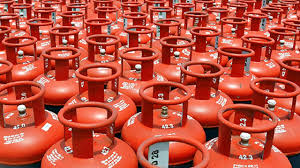
- The cylinder — a sealed, pressure-tested steel container holding the liquid LPG. Common sizes in Rwanda are 6kg, 12kg, 15kg, and larger industrial cylinders of 25kg and 45kg for restaurants, hotels, and bakeries.
- The regulator — a small device that screws onto the cylinder valve and controls the pressure of the gas coming out.
- The hose — a flexible, gas-rated tube that connects the regulator to your cooker.
- The cooker — anything from a single-burner tabletop unit to a full four-burner cooker with oven.
That's it. Open the regulator, turn the knob on your cooker, click the ignition, and you have an instant, controllable flame. No fanning. No smoke. No waiting.
LPG vs Charcoal: An Honest Comparison
Let's get past the marketing language and look at how the two fuels actually compare for someone living and cooking in Rwanda today.
1. Cost — The Number That Surprises Everyone
This is where most people get stuck. "LPG is for rich people." It's a common assumption — and it's wrong.
A sack of good-quality charcoal in Kigali now costs anywhere between 15,000 and 25,000 RWF, depending on the season and your neighbourhood. A typical household burns through one sack roughly every three to four weeks. Do the maths over a year and you're spending around 200,000–300,000 RWF on charcoal alone — and that's before you count the cost of replacing your imbabura and the amakara y'akabari you waste lighting it each time.
A 12kg LPG refill in Rwanda generally costs less per cooking hour than charcoal, and a single refill lasts the average family 6 to 8 weeks of normal cooking. The one-time investment is the cylinder itself plus a cooker and regulator — and once you've made that purchase, you only pay for refills.
Within the first year, most households break even or save money compared to charcoal. Every year after that, the savings compound.
2. Speed — Time is Money, Especially for Businesses
A charcoal stove takes 15 to 30 minutes to be ready for serious cooking. An LPG burner takes about 3 seconds.
For a household, that's the difference between starting dinner at 7:00 and starting dinner at 7:30 — every single night. For a restaurant, a chapati stand, or a hotel kitchen, that difference translates directly into more orders served, more customers kept, and more revenue earned. The same applies to bakeries, dry cleaners, and anyone running a salon de coiffure heating water all day.
3. Health — The One You Can't See
Charcoal smoke contains carbon monoxide, fine particulate matter, and a cocktail of other compounds that you inhale every time you cook over it. Indoor air pollution from solid fuels is recognised globally as one of the leading causes of respiratory illness, especially in women and children who spend the most time near the stove.
LPG burns almost completely. The combustion produces mainly carbon dioxide and water vapour — no smoke, no soot on your pots, no stinging eyes, and no black film on your kitchen ceiling. If you've ever had to scrub charcoal residue off a saucepan, you'll appreciate this one immediately.
4. Convenience — The Quiet Revolution
With LPG you can:
- Cook anything at any hour, instantly.
- Control the heat precisely — turn it down for a gentle simmer, turn it up to sear meat.
- Cook indoors without ventilating a smoky kitchen.
- Skip the daily mess of charcoal dust, ash, and soot.
- Stop buying and storing heavy sacks of charcoal.
Once you've used it for a week, going back to charcoal feels like going back to a kerosene lamp after experiencing electricity.
5. Environment — Briefly, Because It Matters
A bag of charcoal represents trees that were cut down, often illegally, somewhere in the country. Rwanda has been working hard on reforestation, and reducing charcoal demand is part of that picture. LPG isn't a perfect fuel — it's still a fossil fuel — but switching from charcoal to LPG meaningfully reduces deforestation pressure and household emissions. It's a real, measurable improvement.
We won't moralise about it. The economic and health case alone is more than enough.
"But Isn't LPG Dangerous?" — The Safety Question
This is the most common worry, and it deserves an honest answer.
LPG is safe when handled correctly — and "correctly" is genuinely simple:
- Buy from reputable dealers. Cylinders should be properly maintained and pressure-tested. The dealers listed on Tekeraheza.com are vetted suppliers, not the random street vendors with rusty cylinders.
- Use a quality regulator and hose. Replace the hose every two years. It's a small cost for a big safety margin.
- Keep the cylinder upright and in a ventilated space.
- Smell something? Don't light a match. LPG has a deliberately added odour so you can detect leaks immediately. If you smell it, turn the regulator off, open the windows, and step away. Then call your dealer.
- Never store cylinders in direct sunlight for long periods or near open flames.
Properly used, LPG has been the standard cooking fuel for hundreds of millions of households worldwide for decades. It is far less dangerous than the carbon monoxide quietly accumulating in a charcoal-heated room.
How to Make the Switch — What You Actually Need
Switching to LPG is much simpler than people assume. Here's the shopping list for a typical home:
- A cylinder (6kg, 12kg, or 15kg depending on your household size).
- A regulator matched to the cylinder's valve type.
- A gas-rated hose (usually 1–1.5 metres).
- A cooker — anything from a 1,500 RWF single-burner tabletop unit to a full standing cooker with oven.
- An igniter or matches for the first light.
For most families, the 12kg cylinder is the sweet spot — long enough lasting that you're not refilling constantly, light enough that one person can carry it.
For businesses, the 25kg or 45kg cylinders make more sense, sometimes connected in a bank of two or more for continuous supply.
Why Tekeraheza.com
Here's the practical problem with switching to LPG in Rwanda: finding a trustworthy dealer near you used to be a hassle. You'd hear about a guy in your sector, prices would vary wildly, refills wouldn't always be available, and you had no way to compare options.
Tekeraheza.com was built to solve exactly that.
It's an online marketplace bringing together LPG dealers from every region of Rwanda — Kigali, Eastern Province, Western Province, Northern Province, and Southern Province — onto a single platform where you can:
- Browse and compare cylinders of every size and brand currently available in the country.
- Order refills for delivery or pickup from a dealer near you.
- Buy accessories — regulators, hoses, cookers, ovens, lighters, replacement valves, and everything else you need to set up a proper LPG kitchen.
- See real prices before you call, so you're never overcharged.
- Find a dealer in your district, not just in the capital.
Whether you're in Kigali, Huye, Rubavu, Musanze, Nyagatare, or anywhere in between, there's a Tekeraheza dealer ready to serve you.
And to the dealers reading this — if you sell LPG cylinders, refills, or accessories anywhere in Rwanda, Tekeraheza is open to you. Come list your products, reach customers across the country, and grow your business. The platform is built to be a meeting point for the whole industry. Come one, come all.
Frequently Asked Questions
Will my food taste different on LPG? Not at all. If anything, you'll get more even, controlled cooking. The smoky charcoal flavour people associate with grilled meat comes from the meat itself and the heat, not the fuel — and for grilling specifically, you can still keep a small brochette setup outside if you love that taste.
How do I know when my cylinder is almost empty? You'll notice the flame getting weaker, or you can lift the cylinder — an empty 12kg cylinder is dramatically lighter than a full one. Some users keep a spare to swap in immediately.
Can I refill any cylinder anywhere? You generally refill with the same brand of cylinder you bought. Tekeraheza.com makes it easy to find dealers carrying your specific brand.
Is LPG safe to use in a small apartment? Yes, as long as the kitchen has basic ventilation — a window or door that opens. This is no different from any kitchen in the world.
What if I need help installing everything? Many Tekeraheza dealers offer installation and set-up. Just ask when you order.
The Bottom Line
Charcoal isn't going anywhere overnight, and nobody is asking you to throw out your imbabura tomorrow. But the case for LPG today — in 2026, in Rwanda — is overwhelming. It's cheaper over time. It's faster. It's cleaner. It's healthier. It's more convenient. And for the first time, it's genuinely accessible to the average Rwandan household, not just the wealthy few in Kiyovu and Kacyiru.
Whether you're a mother tired of the daily charcoal ritual, a restaurant owner watching your margins shrink, or a chapati vendor who wants to serve customers faster — the switch is worth it.
Visit Tekeraheza.com today. Compare cylinders. Find your nearest dealer. Order accessories. Make the change.
Your kitchen — and your lungs, and your wallet — will thank you.